I began by drawing on my parents’ walls. They quickly bought me a board, more than likely to save the house.
Even then, I knew I wanted to be an artist. It wasn’t unfamiliar – my father, grandmother and great-grandfather all painted.
It was simply something that felt natural, something I moved toward without really questioning it. I can now say I am an Australian landscape painter based on the Gold Coast.
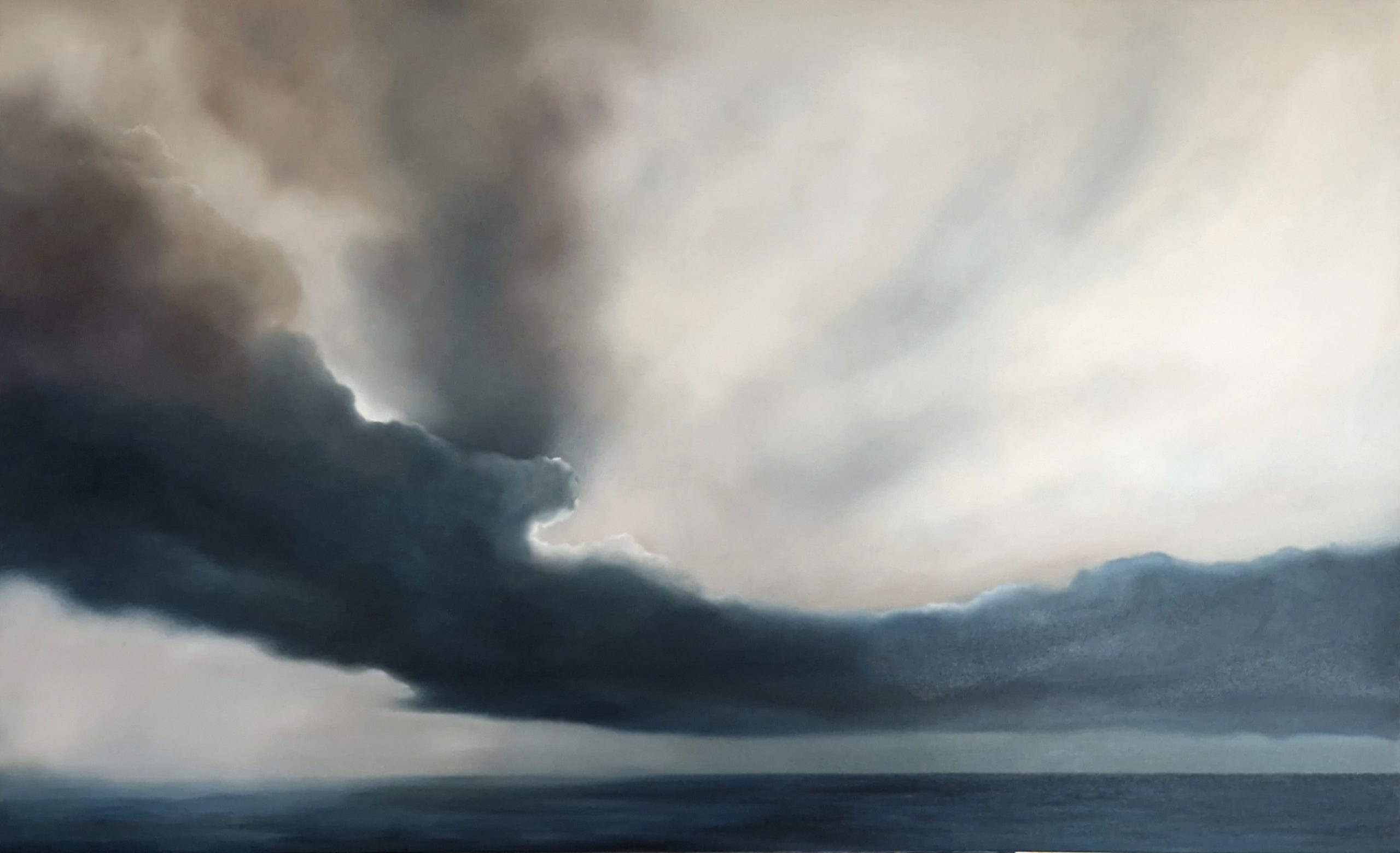
I remember watching my father paint clouds. He painted stormy skies, those heavy green tones that carry weather in them, and I would sit and watch as they formed on the canvas. Something about that stayed with me.
I was accepted into art school at fifteen, among students much older than myself. Those early years were spent learning the discipline of seeing – anatomy, perspective, colour and structure – along with time experimenting with other mediums.
For a period, I was drawn to sculpture. I loved its physicality, the way form could be built and held. I think that sense of structure still sits quietly underneath my paintings now.
But over time, painting became my focus, and in many ways, my freedom.
After graduating from the National Art School in Sydney, life shifted course. Illness forced a pause, and my family moved to the Gold Coast.
When I first approached a gallery there, I was told I had no talent and should pursue something else. It stayed with me longer than it should have.
It took years before I returned to painting with any real confidence.
When I did, it was through persistence more than certainty. Bruce Watling later offered me a solo exhibition, and that marked the beginning of finding my way back.
Art has never been optional for me. It is something I have always returned to, something I needed to do.
Sculpture really was my first love, and I still feel its influence in the work, but painting offers a kind of openness that nothing else does.
There are no real limits to it, and it allows me to continue working with that same sense of form and presence without the physical constraints that come with other mediums.
The work has always circled the same place. As a child, I watched storms roll in over Sydney Harbour.
Now I watch them arrive across the water and hinterland of the Gold Coast. The landscape has changed, but the feeling hasn’t.
My paintings sit in that space – not in the height of the storm, but in the stillness within it. The moment where something holds steady, even as everything shifts around it.
Over time, the work has become quieter and more resolved.
Producing work consistently has deepened the way I see and respond. The paintings are less about describing the land and more about what is felt within it.
There is a sense, I think, of lived experience in them. Not in any direct or literal way, but in the atmosphere they carry.
Life brings its share of movement, difficulty and change. The work doesn’t tell those stories, but it is shaped by them.
These works are intended to be lived with. To bring a sense of stillness into a space.
Not as something that demands attention, but something that holds it quietly, over time.