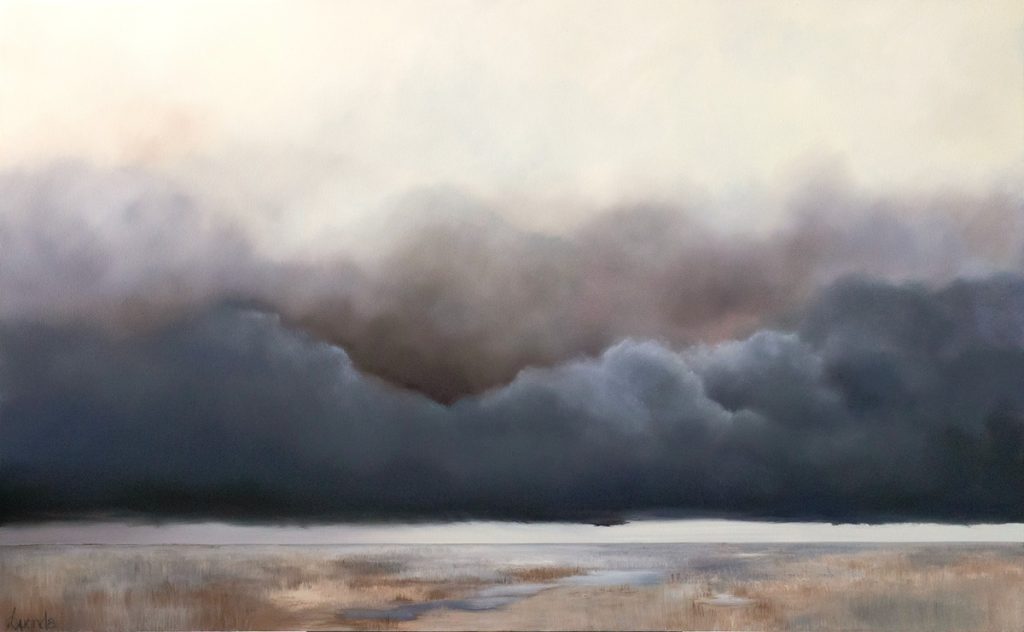
Lately, my paintings have grown quieter. Not as a deliberate change in style, but because that is how the work has begun to feel. The landscapes have slowed. The compositions have pared back. The need to describe or assert has eased, leaving space for weather, distance, and light to exist without being pushed.
I’ve painted landscape for most of my life, returning again and again to horizons, trees, roads, and sky. Over time, these elements stopped being subjects in themselves and became constants — familiar forms through which meaning could shift and deepen. The longer I’ve worked with landscape, the less interested I’ve become in describing it literally, and the more I’ve been drawn to what it holds emotionally: the weight of air, the pause after weather, the sense of endurance that sits quietly within place.
There is something that happens with time — in life as much as in painting — where urgency gives way to attention. What once felt necessary begins to fall away. What remains is not emptiness, but clarity. I find myself less concerned with capturing moments of drama and more interested in what lingers: the calm that follows movement, the stillness that feels earned rather than imposed.
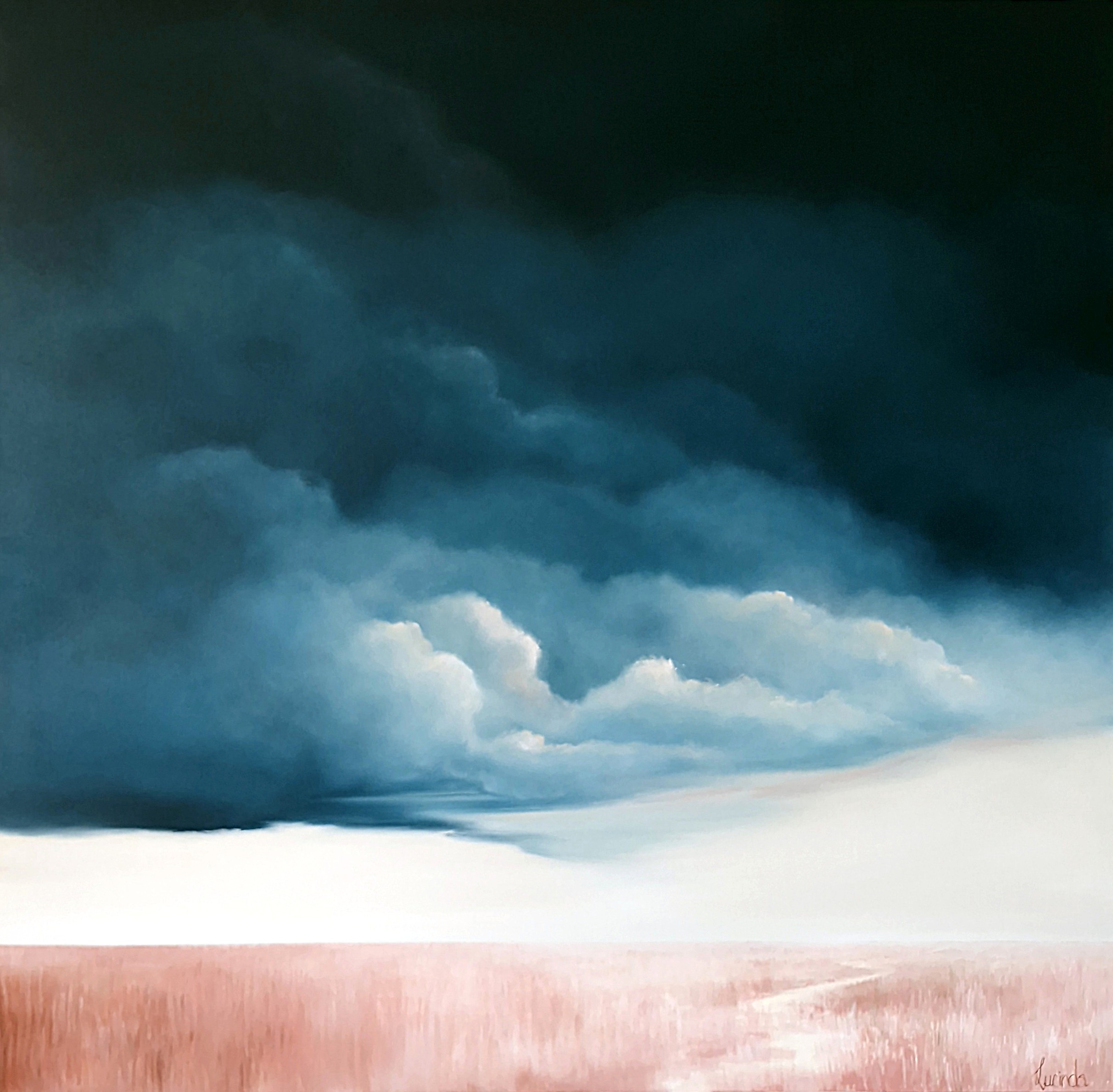
Before The Sky Breaks
I’ve been thinking about cycles recently, not in any symbolic or mystical sense, but as a recognition that certain periods draw reflection rather than expansion. Times when the outward drive softens and listening takes precedence over declaration. Rather than resisting that pull, I’ve allowed it to shape the work.
The recent landscapes reflect this shift. They are quieter, more contained, and less descriptive. Horizons stretch without insistence. Forms act as anchors rather than subjects. Colour is restrained and responsive, drawn from weathered light and familiar terrain. These paintings are less about depicting place and more about creating a space to stand — somewhere the eye can rest and the mind can slow.
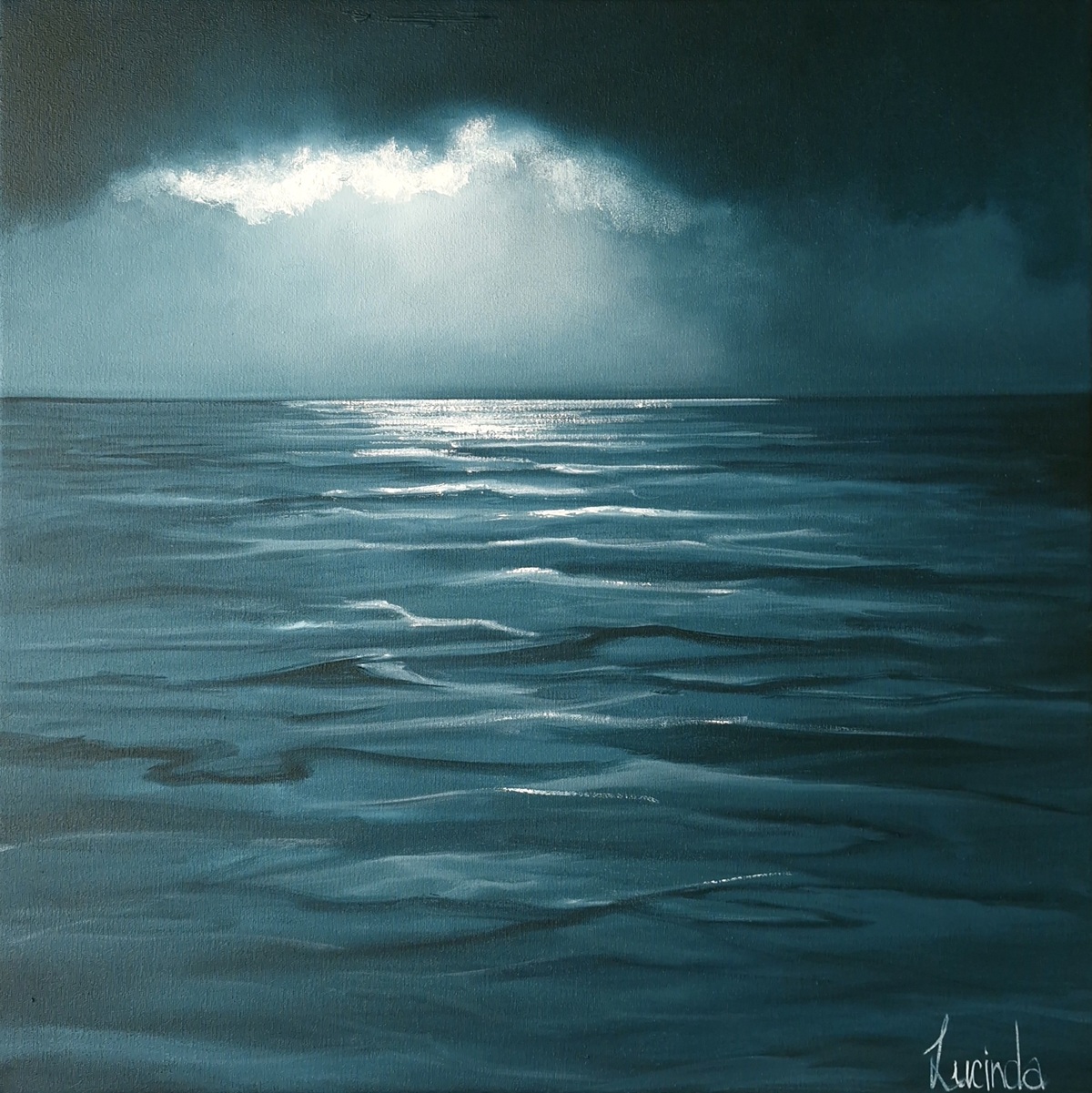
Alongside these works, a small number of moonlit paintings have emerged naturally. They are not a departure from the landscapes, but a continuation of the same concerns — stillness, atmosphere, and the presence of weather — seen through a different light. Night offers another way of holding quiet, another register of restraint, rather than a shift in subject.
I don’t see this body of work as a turning point so much as a distillation. The same questions remain: how land carries memory, how atmosphere shapes experience, how time softens what once felt urgent. The difference is that the work now speaks more softly.
This feels like the right pace for this moment — in the studio and in life. The paintings are allowing more space, asking less, and trusting the viewer to settle into them. Not because something has ended, but because something has resolved.